
In the aftermath of an accident, it is easy to assume that the journey to recovery will be swift and easy. But we know that this is not always the case. At the Law Offices of Vondra & Hanna in Victorville, CA, a personal injury attorney from our team will work with you to make sure your personal injury claims fully account for both current and future expenses. Estimating the cost of future medical care can be overwhelming, but our team is here to lighten the load and support you on your path to affordable recovery.
Involving Medical Professionals to Assess Future Needs
A key part of estimating future medical expenses is obtaining input from healthcare providers who are familiar with your condition. Treating physicians, surgeons, specialists, and physical therapists can provide detailed assessments about your long-term prognosis. These professionals help identify what types of treatments you will likely need in the future, such as surgeries, rehabilitation, medication, or durable medical equipment. An attorney can then review these documents to help determine the long-term cost of recovery, which will be considered in your claim.

In the aftermath of an accident, it is easy to assume that the journey to recovery will be swift and easy. But we know that this is not always the case. At the Law Offices of Vondra & Hanna in Victorville, CA, a personal injury attorney from our team will work with you to make sure your personal injury claims fully account for both current and future expenses. Estimating the cost of future medical care can be overwhelming, but our team is here to lighten the load and support you on your path to affordable recovery.
Involving Medical Professionals to Assess Future Needs
A key part of estimating future medical expenses is obtaining input from healthcare providers who are familiar with your condition. Treating physicians, surgeons, specialists, and physical therapists can provide detailed assessments about your long-term prognosis. These professionals help identify what types of treatments you will likely need in the future, such as surgeries, rehabilitation, medication, or durable medical equipment. An attorney can then review these documents to help determine the long-term cost of recovery, which will be considered in your claim.

Even a small trip or slip can lead to significant injuries, but if someone else is at fault, proving your case can be challenging. If you have had an accident in Victorville, CA, hiring a personal injury lawyer as soon as possible is essential. They can help obtain the evidence required to prove your case and ensure that you receive fair compensation according to California law.
What Must Be Proven in a Slip-and-Fall Case?
Slip-and-fall cases in California fall under premises liability law. This means that the property owners are held responsible for any unsafe conditions that injure legal visitors. To successfully claim for compensation, the following must be proven:
- There was a duty of care to you
- There was a breach of the duty
- You were injured as a direct result of the breach
Any evidence which proves any or all of the above will help to strengthen your case.

Have you or someone you know had a child who was involved in a pedestrian accident in Victorville, CA? A personal injury attorney may be able to help you understand how the law deals with pedestrian accidents involving children.
Different Standard of Care in the Case of Children
The “standard of care” is a legal measure of how people are expected to behave based on what a reasonable person would do in similar circumstances. A pedestrian would, for example, be expected to look both ways before crossing a street or to wait for a “walk” sign at a crosswalk.
However, a different standard of care is applied to minors involved in pedestrian accidents, since children cannot be expected to have the same level of caution as an adult would because of their age, knowledge, and experience.

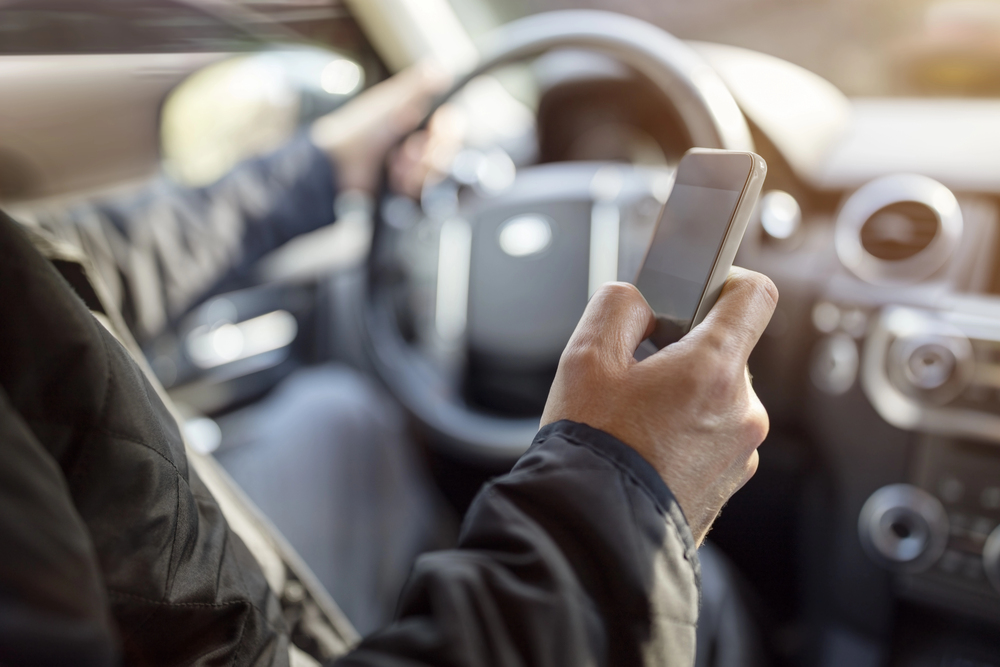
If you have been injured in a car accident caused by distracted driving, you may be able to file a lawsuit for damages. Here is some advice from a personal injury lawyer in Victorville, CA, on some of the issues to consider.
What Counts as Distracted Driving?
Under California law, every driver has a duty to operate a vehicle responsibly. Any activity that impedes the driver’s ability to operate the vehicle safely is considered distracted driving. Distracted driving could be caused by something obvious such as texting or interacting with a navigation system. It could also be something as simple as eating or interacting with another passenger.
U.S. regulators push for massive airbag recall
Airbags protect passengers during a collision or car accident. They work with seatbelts and save thousands of lives annually. However, if used or installed improperly, they can also cause injury and even death. That is why regulators issue an order for a recall when they discover defective airbags.
51 million units recalled
In a report last September 2024, the National Highway Traffic Safety Administration (NHTSA) issued a recall for airbags manufactured by ARC Automotive Inc. and Delphi Automated Systems LLC. Manufacturers such as GM, Stellantis, Volkswagen and Hyundai have used some of these defective airbags.
The recall was issued when NHTSA identified faulty airbags with ruptured inflators as the cause of at least nine injuries, including two deaths. This recall is reminiscent of the massive 100 million airbag recall of the now-defunct Takata Corp.
Check your vehicle
If you think the recall affects your vehicle, visit the NHTSA website and enter your Vehicle Identification Number (VIN). You should be able to see if your car is part of the recall order. If it is, you should receive a letter informing you of a recall. However, letters sometimes go missing, so you should check the website personally. If the recall affects your vehicle, contact your dealer to get it repaired for free.
In case of an accident
If you have already been in an accident and discovered you had a faulty airbag, you may be entitled to compensation. Consider talking to a legal professional who can advise you on what to do next.
Driving at any time is risky, and people typically don’t want to give up the convenience of on-demand transportation just because a crash could someday occur. Instead, they may want to engage in harm reduction by learning more about their risks.
Statistically, there are certain times when crash risk is higher than others. Drivers who are aware of statistical trends can make better choices about how and when they drive. Although some decisions, such as when professionals have to arrive at work, are not under their control, motorists do have the ability to make plans that minimize their crash risk by limiting their time on the road when conditions are most likely to result in a wreck.
What do statistics show are the most dangerous times for people to drive?
After the sun sets
The National Safety Council (NSC) helps guide public policy and household safety by gathering and analyzing injury and fatality information. The NSC has found that the nighttime is the most dangerous time for people to be on the road. Many of the worst crashes occur after the sun sets. Teens, pedestrians and cyclists may all have more risk after dark. Factors including fatigue, visibility issues and increased risk of encountering drunk drivers all contribute to nighttime collision risk.
During the afternoon rush hour
The NSC also notes that the roads can be particularly dangerous between 4:00 p.m. and 7:00 p.m. on weeknights. Fatigue after a long day at work, frustration over rush hour traffic jams and even the decision to stop at happy hour on the way home can all contribute to the possibility of a crash occurring during a professional’s afternoon commute home.
Holidays and the weekends closest to them
Quite a few people travel by motor vehicle to attend family holiday celebrations. They may be in unfamiliar areas, distracted by their children or under the influence of alcohol. As such, the overall risk of a drunk driving crash is substantially higher around the holidays. Plenty of crashes related to distraction also occur. Those traveling on the holidays or the weekends closest to them often need to plan carefully to limit their risk of a preventable crash on their way to or from holiday celebrations.
While people cannot necessarily stay off the road when crash risk is highest, they can be more attentive if they know that their crash risk is higher than usual. Ultimately, learning more about motor vehicle collision trends can be beneficial for those trying to avoid crashes or seek compensation after a collision.
Who’s liable when self-driving cars crash?
The future is zooming toward us faster than we might think. Self-driving cars, once a sci-fi fantasy, are now testing on roads across America, including right here in the High Desert. As these autonomous vehicles make their way to our community, they bring with them a host of new legal questions. Perhaps the most pressing question is: Who’s liable when these cars crash?
Shifting gears in liability
Traditionally, when a car accident occurs, we look to the driver. Did they run a red light? Were they distracted? But with self-driving cars, this approach hits a roadblock. There’s no human driver to point to. Instead, we must turn our attention to the vehicle itself and those who created it.
This shift puts product liability law in the driver’s seat. Manufacturers, software developers and even component suppliers could find themselves under the legal microscope. It’s a change that could revolutionize how car accident cases are handled in Victorville and beyond.
But it’s not just about assigning blame. This shift also raises questions about consumer rights and responsibilities. If you own a self-driving car, what are your obligations? Are you responsible for software updates? What happens if you ignore a recall?
The new legal roadmap of liability
Courts and lawmakers are now tasked with navigating this new terrain. Current product liability laws weren’t written with autonomous vehicles in mind. They’ll need to evolve to address issues like software glitches, sensor failures and AI decision-making errors.
For instance, how do we define a “defect” in a self-driving car? Is it a problem with the physical vehicle, or could it be a flaw in its decision-making algorithms? These are complex questions that don’t have easy answers.
Moreover, as these vehicles become more common on our desert roads, we’ll need to consider how they interact with human drivers. If a self-driving car and a human-driven vehicle collide, how do we determine fault?
As we look to the future, it’s clear that self-driving cars will bring both exciting opportunities and complex challenges to our desert communities. While the legal landscape is still evolving, staying informed about these changes is important to better prepare yourself for the implications of this technological revolution.
What’s the real cost of desert speeding?
Desert highways can be deceptively dangerous. Their wide lanes, sparse traffic and endless horizons often tempt drivers to speed. This combination leads to severe accidents with devastating consequences for victims and their families.
Such incidents aren’t random. They result from a mix of environmental factors and human behavior. Understanding these risks is crucial for anyone traveling through the desert. Recognizing the unique challenges of desert driving can help people protect themselves and others on the road.
Why desert roads encourage speeding
Desert highways create conditions that promote speeding due to factors such as:
- Long, straight stretches of road
- Limited police presence
- Fewer visual cues to gauge speed
- A false sense of safety due to open space
These factors can make drivers feel overly confident, yet the dangers are real. In California, speeding is a leading cause of traffic fatalities. On isolated desert highways, accidents can turn critical due to delayed emergency response.
California takes speeding seriously. Fines increase in “Safety Enhancement-Double Fine Zones,” which include many desert highways. The actual cost, however, becomes apparent when accidents occur.
Consequences of high-speed crashes
High-speed accidents often result in:
- Life-altering trauma such as brain and spinal damage
- Higher chance of fatalities
- Increased property damage
- Longer recovery times for survivors
Victims often face long and challenging recoveries. California law allows them to seek compensation, but establishing fault in high-speed desert accidents can be complex.
Evidence gathering presents unique challenges. The vast terrain and harsh conditions can quickly alter crucial elements like skid marks. Witnesses are often scarce and isolation can delay evidence preservation. Still, vehicle damage, witness statements and data from modern car recorders provide vital information. Preserving this evidence is essential for protecting your rights if you’re involved in an accident.
Staying safe on desert highways
California uses a “pure comparative negligence” rule. This rule allows partially at-fault parties to seek damages, though their percentage of fault reduces compensation.
To avoid accident risks and reduced compensation:
- Use cruise control to maintain a legal speed.
- Take regular breaks to stay alert.
- Maintain vigilant situational awareness on the road.
- Ensure your vehicle is in good condition before long trips.
After a desert highway accident, seek immediate medical attention. It is advisable to consult an auto accident attorney experienced with these cases.
The thrill of speed isn’t worth the risk. Enjoy the desert’s beauty at a legal pace to make its highways safer for all.
Anyone bitten or attacked by a dog knows how traumatic the experience can be. The last thing you need after this harrowing incident is to worry about the financial support you need to recover from your injuries.
While California law holds dog owners responsible for their dog’s actions, some insurance companies might try to dodge their obligations. They may dispute your claim by shifting the blame away from the dog owner and onto you in an attempt to pay less or nothing at all.
Insurers aim to protect their interests, not yours
If you have filed or are planning to file a personal injury claim, it is crucial to recognize victim-blaming tactics of insurance companies, such as:
- Downplaying your injuries: The insurance adjuster might say your injuries are not that severe or that they are not related to the dog bite.
- Focusing on your actions: Did you pet the dog? Did you run past it? Did you make any loud noises? Adjusters might try to use these questions to argue that you provoked the dog, even if your actions were harmless.
- Questioning why you were there: Even if you were on public property or had permission to be on private property, the insurance adjuster might try to argue that you should not have been there in the first place.
- Twisting your words: They might try to take your words out of context to make it seem like you are partially responsible for the attack.
- Pressuring you to accept a low settlement: Insurers often make low initial settlement offers, hoping you will accept out of desperation.
These tactics can leave you feeling confused, frustrated and doubting your experience. However, you do not have to stand for any of it.
Fighting for the compensation you deserve
Your recovery after a dog bite incident may heavily depend on the monetary payments a personal injury claim can provide to cover your medical expenses, income disruption and other losses. It is imperative that you continue your pursuit of this legal tool, regardless of the insurer’s approach toward your injury.
Working with a lawyer during this fight can help level the playing field against the insurer’s team of legal professionals. Your attorney can recognize and counter victim-blaming tactics and bring in other key authorities to strengthen your case if needed.
Connect with us


- February 2026
- January 2026
- December 2025
- October 2025
- September 2025
- August 2025
- July 2025
- June 2025
- May 2025
- April 2025
- March 2025
- February 2025
- January 2025
- November 2024
- October 2024
- September 2024
- August 2024
- July 2024
- June 2024
- May 2024
- April 2024
- March 2024
- February 2024
- January 2024
- December 2023
- November 2023
- October 2023
- September 2023
- August 2023
- July 2023
- June 2023
- May 2023
- April 2023
- March 2023
- February 2023
- January 2023
- December 2022
- November 2022
- October 2022
- September 2022
- August 2022
- July 2022