
Law Offices of Vondra & Hanna

Blog

How Do You Prove a Lane-Splitting Motorcycle Crash in California?

How Do You Prove a Lane-Splitting Motorcycle Crash in California?
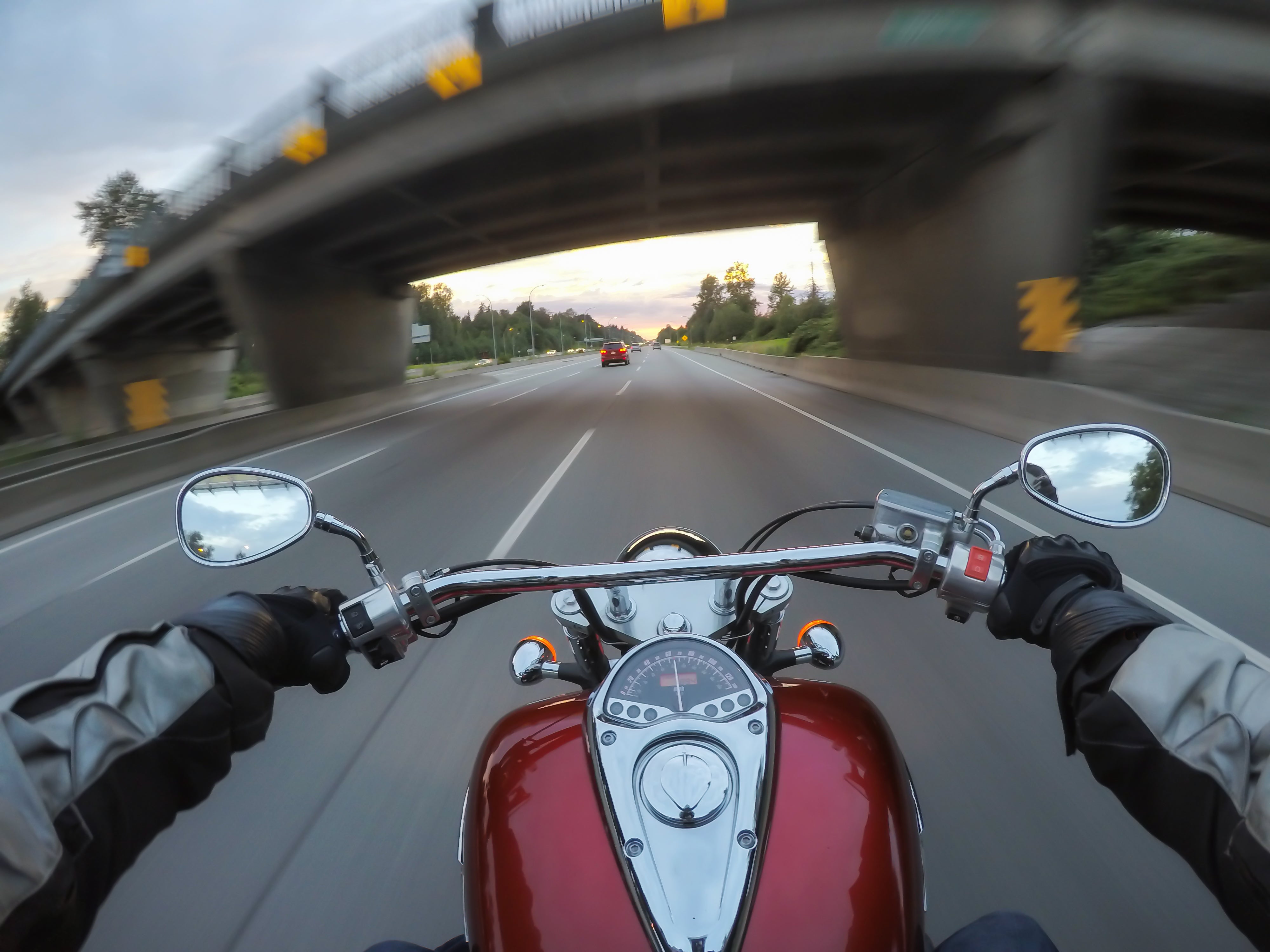
Here in Riverside, CA, lane splitting is legal. However, the way in which the rider was navigating the lanes in respect to road and weather conditions could contribute to an accident. Whether you're a rider defending yourself from assumptions about fault or another party needing to prove that a motorcyclist caused your harm, a motorcycle accident attorney can help you prove what really happened.

Proving Lane-Splitting and Other Issues in a Riverside, CA Crash

Photos

Photographs of the point of rest after the accident, of scrape marks or gouges on or next to the lane lines or Botts' dots, of paint transfer on the side of a car rather than on its rear bumper, and of the motorcycle's final orientation relative to the painted divider are ordinarily the best way to provide physical proof of lane splitting.

Witness Testimony

A witness who saw the motorcycle travel between two rows of cars or who saw the other vehicle move laterally into that space may testify to those observations. This is always good evidence, particularly if the witness is a third party who wasn't involved in the accident.

Video

Video from a helmet camera, a motorcycle-mounted recorder, another motorist's dash camera, or a nearby fixed camera can also be very helpful in proving the positions of all vehicles just before and during the crash.

Police Report

The police report of the accident will normally have diagrams, driver and witness statements, and identifying information that can be very useful in establishing the facts of what happened. Observations recorded by an officer at the scene, like the positions of vehicles or where debris or fluid were lying, are useful, as is the officer's on-the-spot professional opinion about what happened.

Expert Witness Testimony

Sometimes the physical evidence is inconclusive, no third-party witnesses saw the events, or no video camera captured it fully. Where the physical record is incomplete, an expert may be able to reconstruct the speed, heading, and point of impact of the vehicles by looking at the crush, yaw, video frame intervals, or event-data-recorder output. Your lawyer will have a network of such professionals to turn to if their testimony is needed.

Lane-Splitting and Fault

Lane-splitting itself is lawful, so fault will depend on the precise movements that produced the contact and crash: whether these were movements by a driver who didn't see the motorcyclist or realize that lane splitting is legal or a motorcyclist that was lane splitting in an unsafe manner.

A driver who changes lanes, drifts, or opens a door into the space the motorcycle is already occupying may be considered at fault; conversely, a rider whose speed or movement choices weren't prudent under the conditions may be at fault. In some cases, both the driver of the car and the motorcycle rider could bear some blame.

Talk to a Motorcycle Accident Attorney Today

Wherever you are in the process of dealing with a fault after a motorcycle accident, we can help. Contact the Law Offices of Vondra & Hanna in Victorville for help through the High Desert area. 

Recommended Posts

What Role Do Witness Statements Play in Hit-and-Run Cases?

After a hit-and-run, witness statements can be immensely valuable, and for a variety of reasons. A car accident lawyer in Victorville, CA can help you use witness statements to identify the driver, support your claim, establish the facts, and potentially more. Witness Statements and Hit-and-Runs detail of car wreck after fender bender accident. broken headlight and battered hood. For the Criminal Side When another driver strikes your vehicle, or you, and then flees the scene, finding them is a top priority. California law requires any driver involved in an accident that causes injury or property damage to stop, provide identifying details, and render reasonable aid. Leaving without doing so is a criminal offense. Independent observers often become the primary source of identifying details that can lead the police, or your lawyer's investigation, to the responsible driver. Bear in mind that it's never safe or advisable to chase a hit-and-run driver, even if your car is capable of doing so after the crash. A fleeing driver may be panicked and dangerous. During the chase, either you or they may accidentally hurt someone else, and even if you catch the driver, you don't know how they might react. Wait for the police and allow them to do an investigation and contact an attorney to dig further and have someone on your side to keep up with the police and your insurer. For the Civil Side Witness accounts also strengthen the civil side of your case. If you end up having to file an uninsured-motorist claim under your own policy, which is common in a hit-and-run, your insurer will want proof that an unidentified vehicle made physical contact with yours or with you. Independent statements help establish the sequence of events, the point of impact, and the fact that the other vehicle left without exchanging information. For any Claim You Bring If the other driver is located and you're able to bring a personal injury claim, a witness statement can corroborate your version of the crash. Courts treat neutral bystanders as more reliable than any party with a financial stake in the outcome, so their testimony will still be helpful to you even when the other party's behavior in fleeing already suggests guilt. Things You Need to Know Act Fast Ask for full names, phone numbers, and email addresses of witnesses as soon as you can after the accident, before they depart. Record a brief description of what each person saw while the events are fresh in their mind, and share this with your lawyer. Get the Police Report Police officers who respond will interview any available witnesses, and those statements give investigators concrete leads. Your lawyer may do an independent investigation, even if the police come up short, so be sure to get the police report number. Talk to a Car Accident Lawyer in Victorville, CA If you've been the victim of a hit-and-run, don't despair. Contact the law offices of Vondra & Hanna in Victorville, CA at 760-514-0344 for a free consultation, so we can review the witness information you gathered and move your claim forward. We've served the whole High Desert area for decades and always demand full and fair compensation for our clients.

What Evidence Shows a Store Knew About a Dangerous Spill?

Getting proper compensation for your medical bills and other losses after a fall injury may require that you show a business knew about a spill and didn't warn you. A slip-and-fall lawyer here in Victorville, CA can help you find and use the right evidence to show a property owner's liability. Why Do You Need to Show That the Store Knew About a Spill? Under California law, everyone must use ordinary care so they do not injure others, and for property owners who invite people onto their property to do business, this means regularly inspecting for hazards. When a spill creates a hazard, the store must fix it, warn you, or clean it up promptly once they know, or should know, about it. What Do You Mean "Should Know" About? There's two types of knowledge in this situation, legally speaking: actual and constructive. Actual Knowledge Actual notice means the store had direct, firsthand awareness of the spill. This could happen if an employee saw the liquid on the floor and walked past it without cleaning or marking the area or if a customer told a clerk about the mess and nothing was done. In these situations, the store cannot claim ignorance. Constructive Knowledge Constructive notice applies when the store (or its staff) did not personally see the spill but had enough time and opportunity to discover it had they been acting with reasonable care. The question is basically whether the hazard had been there long enough that a careful business would have found and fixed it during normal operations. Evidence to Prove Knowledge Video A powerful piece of evidence is surveillance video from the store itself. If the recording shows the spill forming or sitting untouched for twenty, thirty, or even sixty minutes while employees walk by, that can prove constructive notice. Surveillance video is frequently overwritten after a few weeks, so it's important that your lawyer get access to it quickly. Logs Cleaning and inspection logs can also be great evidence. Most large retailers require employees to sweep or check aisles on a schedule. If those logs show the last inspection happened an hour before your fall, and the spill was obvious once you looked at video footage, the gap becomes evidence. A store that skips its own safety routine cannot later argue it had no idea about the hazard. Witnesses Witness statements can also be compelling evidence. Maybe another shopper saw the spill ten minutes before you fell and even stepped around it, or a store employee admitted right after your fall that “we've been meaning to clean that up.” Those accounts can help establish how long the condition existed. Internal Complaints Your lawyer can get depositions of managers or staff, where they can be asked questions about whether anyone knew about recurring issues in that aisle or if they had received complaints earlier that shift. These can reveal what was really going on. Call a Slip-and-Fall Lawyer in Victorville, CA Today If you believe the store should have known about a spill that injured you, call the Law Offices of Vondra & Hanna in Victorville, CA today. Consultations are always free, and we've recovered millions for our clients here in the High Desert area.

When Can a Manufacturer Be Held Liable for a Defective Product?

When can a manufacturer can be held liable for a defective product?  When their negligence is the reason the product harmed you. Talk to a product liability attorney in Victorville, CA as soon as you can to find out if your injury is likely the fault of a manufacturer and how to hold them accountable. When Can a Manufacturer Be Held Liable for a Defective Product? A manufacturer becomes responsible when a product leaves its control in a defective condition that makes it unreasonably dangerous, and that defect causes harm to someone using it as intended or expected. There are three main categories of defects that can trigger this: When It Was Made Poorly Manufacturing defects occur when a product comes off the line but isn't up to the intended design or specifications. Examples of this would be a contaminated batch of medication or a car part that's assembled incorrectly. When It Was Designed Poorly Design defects affect every item in a product line. With this type of problem, the product performs as planned, but the plan itself is flawed. Examples include a ladder that tips too easily under normal weight or a vehicle with an airbag system that's prone to rupture in certain crashes. When It Was Sold Poorly Marketing defects, or failure-to-warn claims, can be brought when a manufacturer knows or should know of hidden dangers but does not provide adequate instructions or warnings. A cleaning chemical that doesn't have a clear hazard label or a prescription drug where key side-effect information isn't included would be examples of marketing defects. Strict Liability for Manufacturers In most states, including California, manufacturers face what's known as strict liability for defective products. This means you do not need to prove the company actually acted carelessly. Instead, you just show the product was defective when it left the manufacturer's control, the defect made it unreasonably dangerous, and the defect caused your injury. Strict liability applies even when the manufacturer used the highest level of care in design and production. It also applies whether or not you bought the product directly from them. The product simply needs to have reached you as the user or consumer without substantial change in its condition. Additional Claim Possibility While strict liability covers many cases, you can also bring a claim based on negligence or breach of warranty. To bring a negligence claim, you have to show that the company failed to use reasonable care in designing, making, testing, or warning about the product. Then there are warranty claims, and these rest on promises made about the product. There are two types of warranties: express and implied. An express warranty is what appears either in advertising or on packaging statements. Implied warranties are automatic and apply by law. By virtue of selling any product, a manufacturer is promising the product is fit for its ordinary purpose. Talk to a Product Liability Attorney If a defective product has harmed you or someone in your family, contact the Law Offices of Vondra & Hanna in Victorville, CA right away. We've been representing people in Old Town Victorville and throughout the High Desert for more than 30 years.